
If you’ve read my personal story, maybe you’re wondering how I could end up concluding that my calling was related to spiritual and philosophical matters. Well, that would be understandable as I intentionally left out these aspects which, in fact, constitute the main part of my life. Whatever I went through, I was always considering the deeper underpinnings of my experiences, relying heavily on introspection.
For as long as I can remember, I’ve been an observer. I was an “outsider kid”. I had a natural penchant for marginality and both my family and social settings exacerbated that trait. Most of the time, I found myself not feeling part of the group, whatever group that was, and so spent my time witnessing and analyzing. Even as a skateboarding and guitar playing teenager, my hardcore sobriety ― or, I should say, my absolute revulsion for psychotropic substances ― made me a passive observer of drug culture. Later in life, I’d become very good at observing myself, too.
In her younger years, my mother had been a catholic nun, and so I was somewhat raised catholic. I guess. You see, my mom left the convent life because she thought it not religious enough. Even though we did sometimes go to mass, I never felt any dogma pushed on me. I don’t remember much of church except for finding it, yes, boring, but also beautiful. As the priest talked, I dreamingly gazed at the paintings and architecture, reveling in the smells of old wood and frankincense. Looking back, I recognize that my first experiences of God, or of godliness, were directly related to that of beauty.
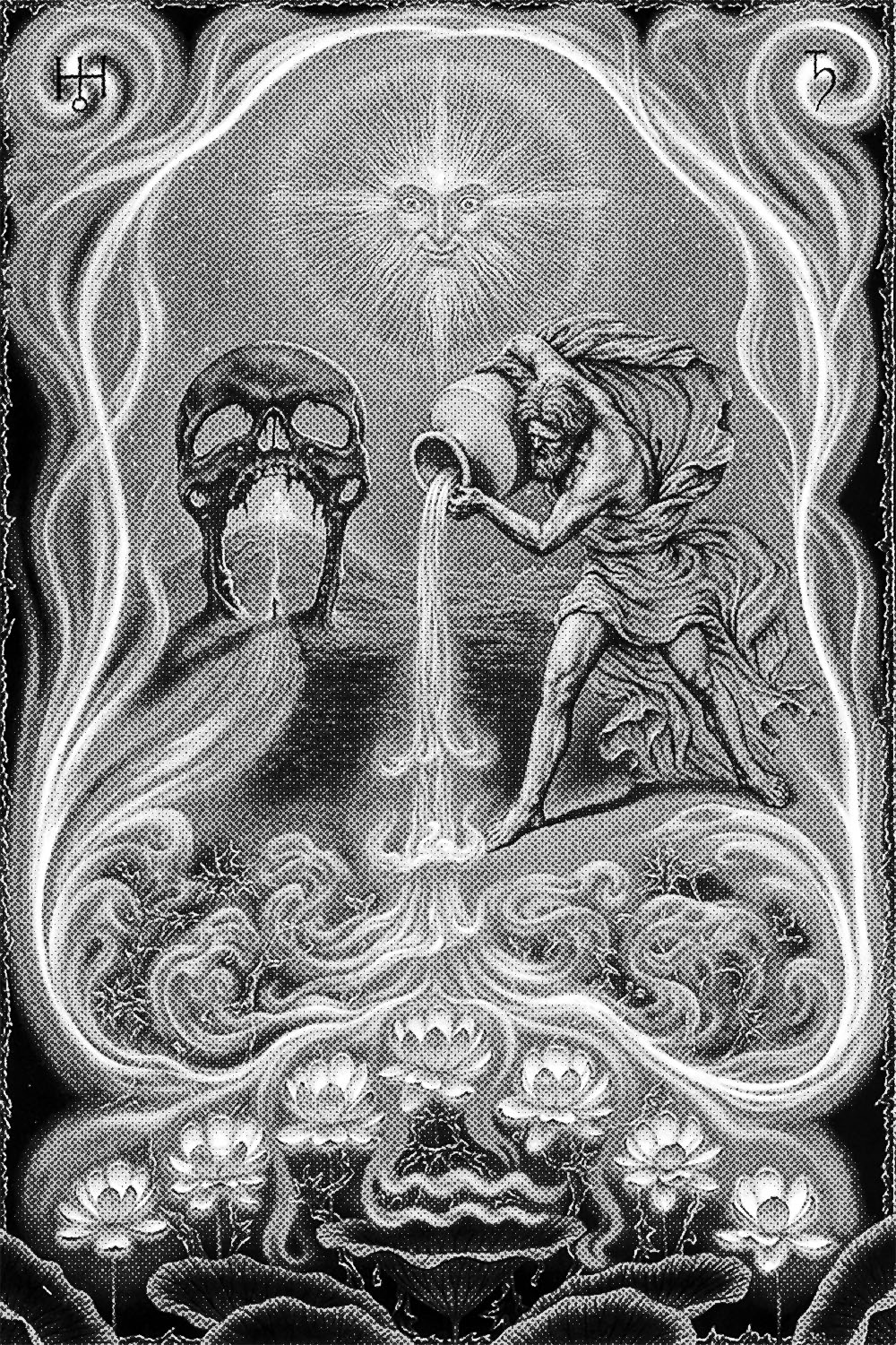
I remember a first awakening, at around the age of 13, while looking at a postcard of a Johfra Bosschart painting. By then, my mom had become a bit of a new ager, and so I opened up to ideas of “astral travelling” and reincarnation. It was about that time too that the seed of Zen Buddhism was planted in me, mainly after getting a book of tales and koans, compiled by Taisen Deshimaru roshi, at the public library. My metaphorical mind was also developing rapidly, which is aptly represented by this following quote, found in an old journal:
I could figure out a life lesson from a pair of dirty socks.
14 year old me.
Then, I… errr… “evolved” to a full on Love and Light guy by the age of 18. That phase, during which my friends were worried I had joined a cult, lasted for a good 5 years… long enough for me to realize not only that my problems remained the same, but also that my depression bouts were getting worryingly intense. My parting with “new agey” thought was abrupt and apparently led me to an experience I could, maybe, describe as a kind of enlightenment. Contrary to popular expectations, that event did not instantly ― or ever ― turn me into an equanimous and masterful being. Quite the opposite in fact. My landmarks had vanished and I couldn’t form a belief that would stand against the reality of that experience. I feel that, for me, it’s when the true shadow work started; an episode that would last from my mid 20s to, at least, my early 40s.
“Life is suffering”, as Buddhists say, became more than a trope for me. From rejecting my deep existential angst, I gradually aimed to understand the mechanics of pain within myself. Eventually, I encountered the words of Krishnamurti, which both confused and helped me in my ambitous task. Although I sometimes found him very difficult, sometimes brutal even, I felt a sympathetic resonance to his teachings. Actually, I thought something about him was strangely… punk. A pure embodiment of DIY spirit, which I’m all about.
Having reached my thirties, obviously without having thrown myself off a bridge, I was deeply invested in the illumination of my darkest corners. I went through intense psychotherapy, and started developing my own introspection methods with various meditative exercises.
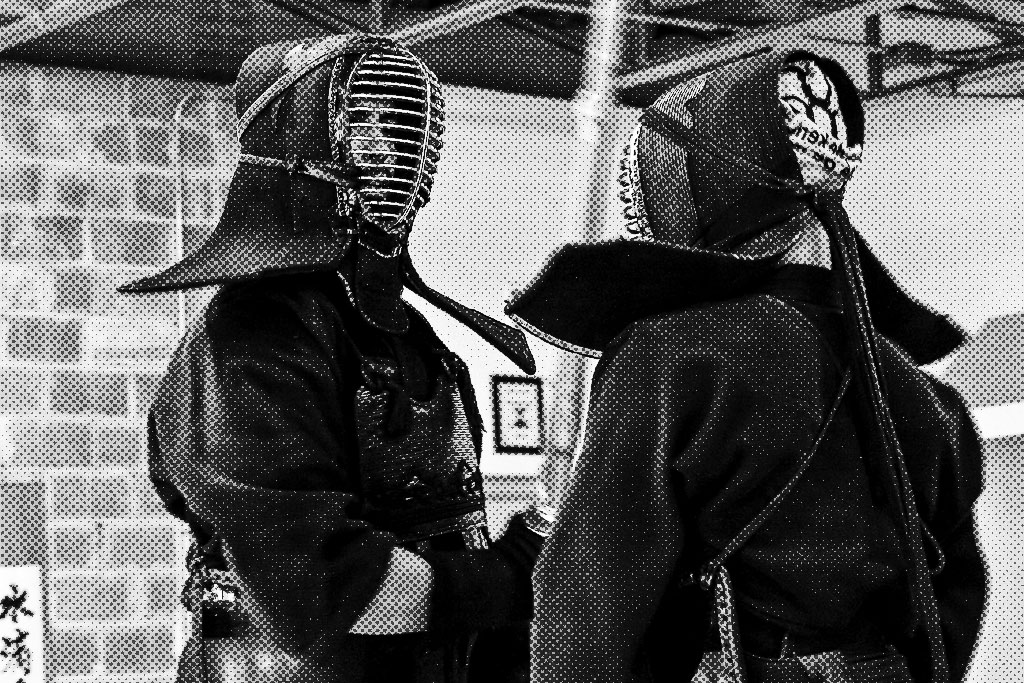
I also started doing kendo, a Japanese martial art, which I practiced devotedly for about 4-5 years. That kind of discipline, especially held without any real effort, was so uncharacteristic of me that I knew I was truly evolving. It also happened that my teacher was an ordained Zen monk who had been a student of Deshimaru roshi, mentioned earlier. And so, I learned kendo as a way, as a psychological, philosophical and spiritual practice. I also long flirted with the practice of zazen, Zen “meditation”, and sparsely frequented a small temple in my area. That said, the “do what you’re told and don’t ask questions” was, as should’ve been expected, too much for little rebel ol’ me, and my guts urged me to move on. Not only couldn’t I help but improvise my own rituals, that is also when I figured that I didn’t want my spirituality confined to specific moments of practice. Mindful presence and lucidity, I believe to this day, should be a part of a normal life. That is, if one wishes to be truly alive.
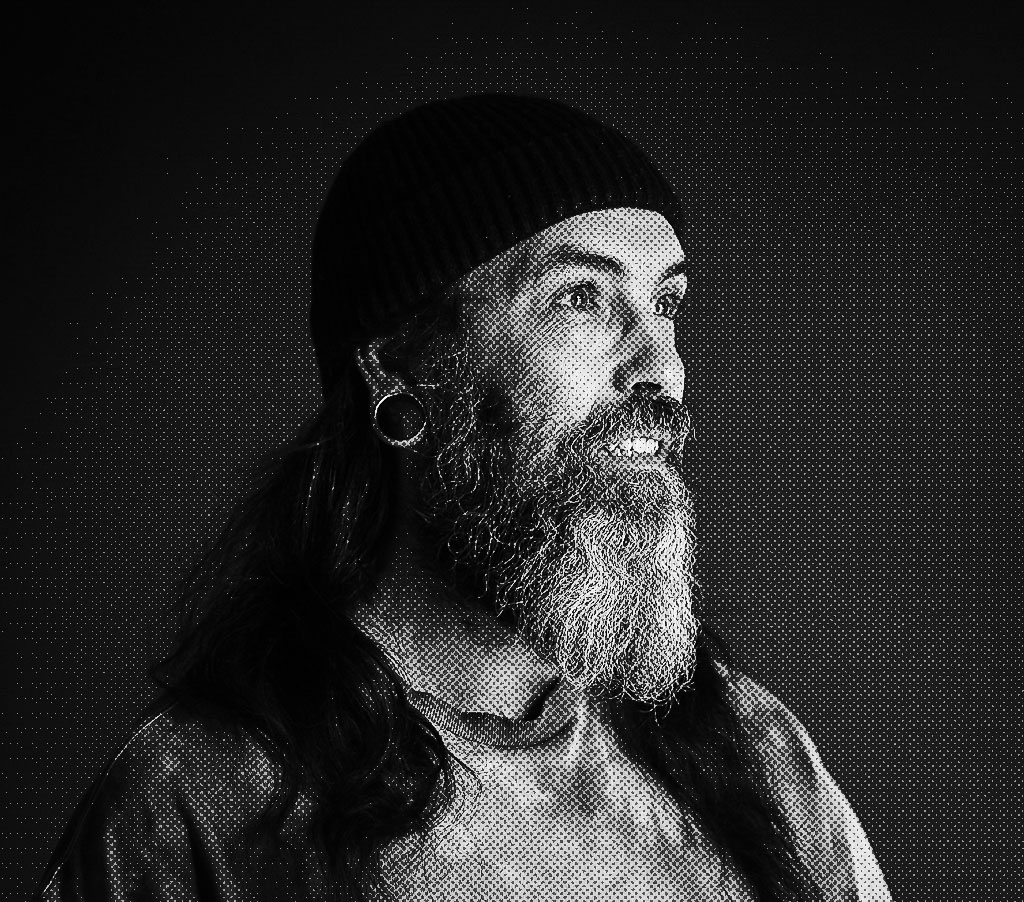
My last few years were spent in somewhat intense introspection and contemplation. Between the solitary evening shifts at the tea warehouse to the isolation of the pandemic, I’ve instinctively dedicated most of my time to deeper thoughts, mine and those of others, with great focus on their applicability. Although “outsider” has always been my default position, I aimed not to set myself apart from the world but, rather, to figure out how to truly participate in it. Over all those years, I’ve deconstructed my own egoic vehicle to pieces, scrutinizing their specific functions. After all, what’s the use of being a meat vehicle only to bitch about the road, or to prance around incoherently in artificial landscapes? There’s nothing more real than life itself, and most certainly, it is not a dream.
It’s kind of an unsexy cliché, but I’ve come to see terrestrial incarnation as a type of game. One of pretend, a theatre of sorts. Weak words to describe the most sacred of all cosmic tricks, I know. Knowing that, sleepwalking through life means being the butt of the joke, hence the belly laugh adepts sometimes experience during moments of enlightenment. Mostly, it seems, our notions of good and evil, our ambitions, identities and cultures are the mere results of conditioning. Life thus can’t be real, as reality is eternally elusive, and therefore is, in essence, a dream.
Some know truth but can’t play the game. Others take part in it but as oblivious pawns. Bridges are needed, and that’s where I come in.
I’ve now written two books to synthesize my worldview and experiences, which I’m now devoted to sharing. At this point, I consider both playfulness and doubt as profoundly spiritual states. Through their embodiment, I thus aim to instil within my beloved human family, both a passion and a curiosity for this big weird game we call Life.